

These stories bring the Distressed Communities Index (DCI) to life and demonstrate how the index can be used to understand the challenges and opportunities that communities face across the United States. These stories are intended to both inform and inspire.
At its heart, the DCI is a tool for exploring the map of American well-being. The stories presented here highlight the many different geographies of economic inequality that traverse the country and explain why they matter, influencing every aspect of life, from the friends one makes to how long one can expect to live.
Cities mirror the nation’s economic disparities
Cities mirror the nation’s economic disparities. While some neighborhoods boast extraordinary wealth, others grapple with extreme poverty, creating an urban landscape of stark contrasts.
The DCI analyzes data from the 100 most populated U.S. cities, ranging in size from New York’s 8 million residents to Spokane, Washington’s 228,000.
Affluent suburban cities in the Sun Belt, characterized by rapid growth and uniformly wealthy areas, top the list of prosperous cities. In contrast, older industrial centers, particularly in the Midwest, tend to rank as the most distressed.
Economic prosperity flourishes in smaller Sun Belt cities
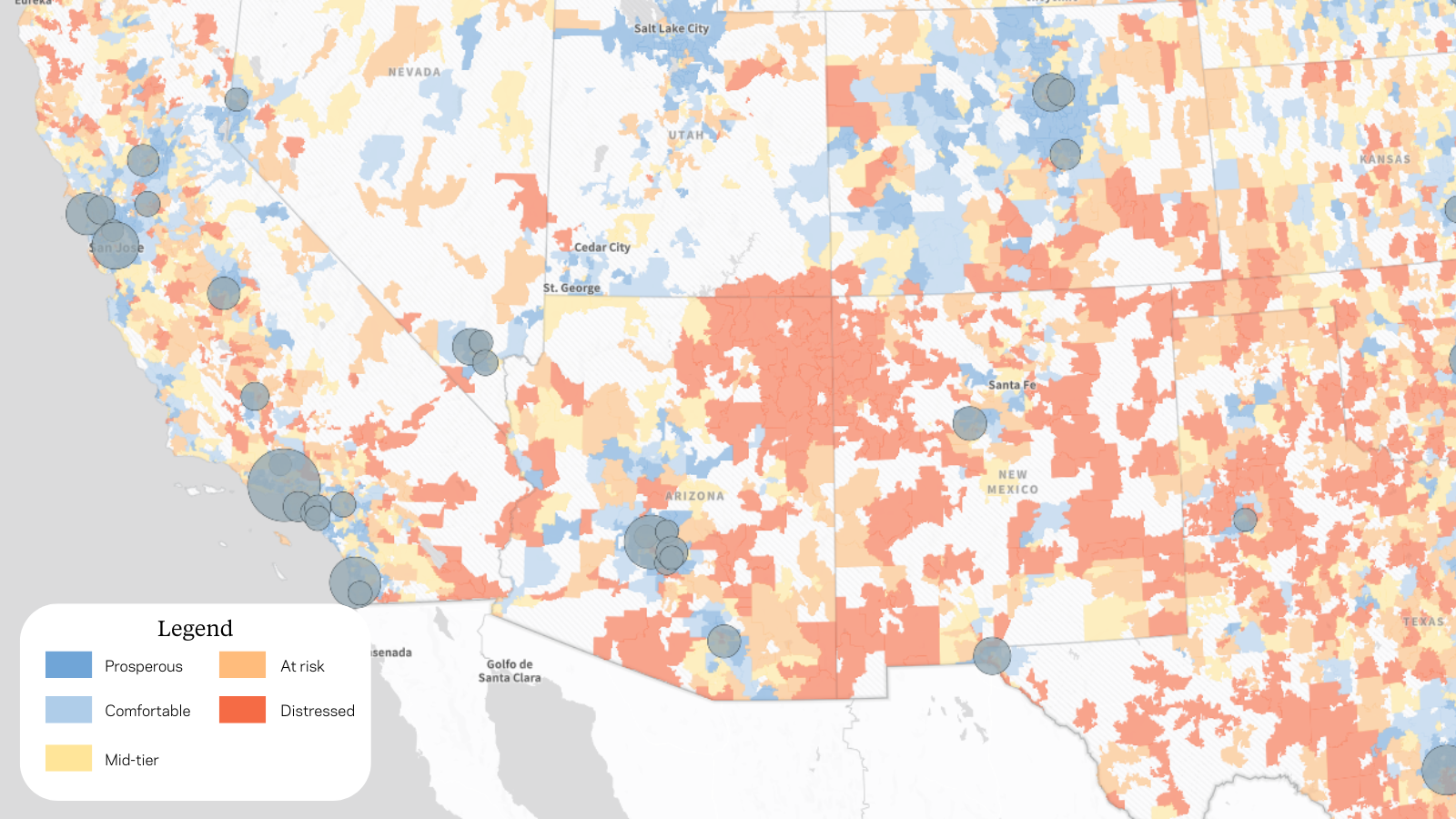
The ten cities with the highest share of residents living in prosperous zip codes are:
Cities that rank highly on prosperity tend to be:
Small- to mid-sized: Larger cities contain more socioeconomic diversity within their borders. Smaller ones are frequently composed of fewer, more similar zip codes.
Suburban: These cities are typically wealthy suburbs situated on the outskirts of major metropolitan areas.
Located in the Sun Belt: These cities are predominantly found in the southern and western United States, with states like Arizona, California, and Nevada hosting a significant number.
Metro Phoenix contains the top three most prosperous cities

The Phoenix region boasts a concentration of affluent urban areas, including three of the top ten cities nationally with the highest percentage of residents living in prosperous ZIP codes: Scottsdale, Gilbert, and Chandler. These cities share characteristics with other high-ranking suburban counterparts in the Southwest, including Henderson, NV (5th), Irvine, CA (7th), and North Las Vegas, NV (10th).
The Phoenix metro region is notable because it demonstrates how municipal boundaries often reinforce economic segregation. While Phoenix and Glendale are home to the region’s most disadvantaged neighborhoods, surrounding incorporated suburbs tend to enjoy higher levels of prosperity.
Gilbert (T-1st)
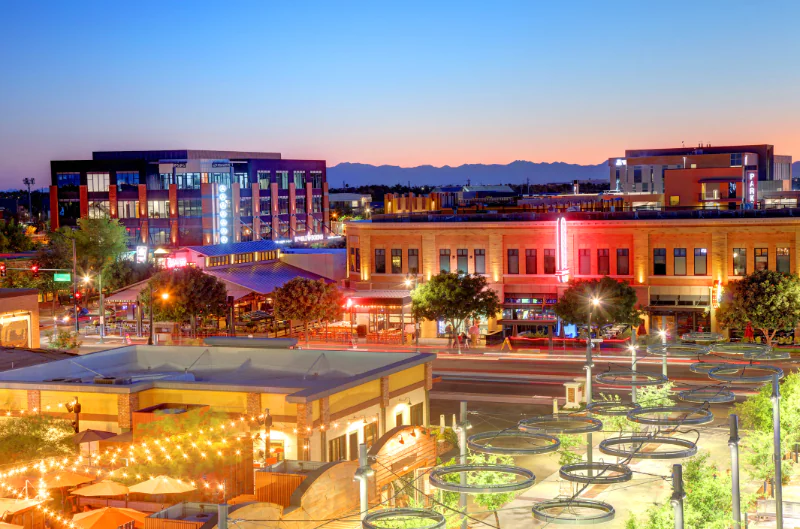
Primarily a farming town just a few decades ago, the city’s rise has rapidly grown from less than 2,000 residents in 1970 to 260,000 today. The DCI’s top-ranked city has a highly educated population and an exceptionally low poverty rate. High incomes, rapid employment growth, and low housing vacancy rates (reflecting high demand to live in the place) boosted it to the number one ranking. The city recently ranked as the 2nd safest big city in America.
Scottsdale (T-1st)
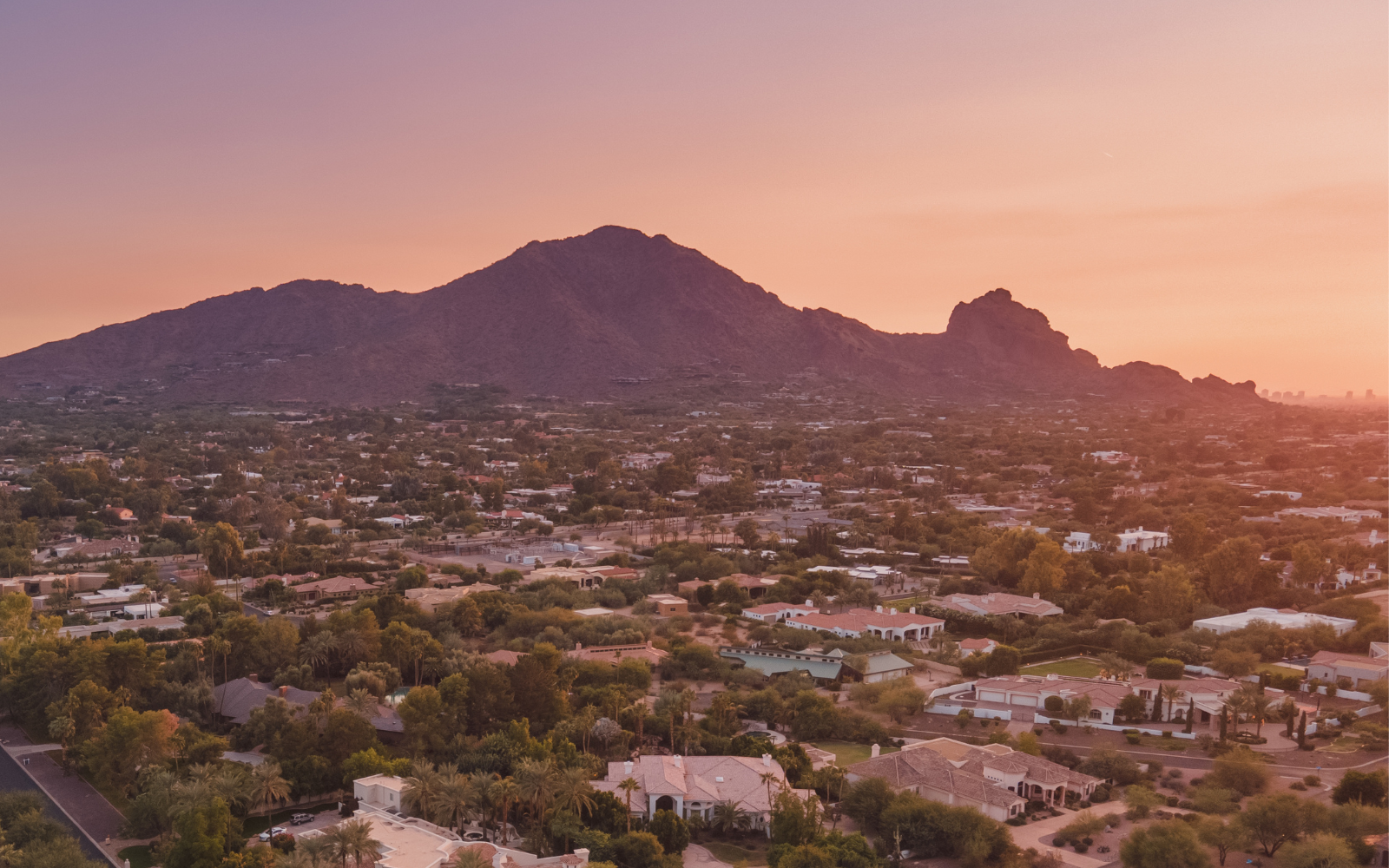
Often dubbed “The West’s Most Western Town,” this city exemplifies the prosperity prevalent in the region. It has experienced rapid population growth, boasts the highest high school graduation rate among the nation’s 100 largest cities, and enjoys high-income levels.
Renowned for its sunny climate, averaging 314 days of sunshine annually, the DCI’s top-ranked city is a particularly appealing retirement destination. Its median age is nearly 15 years older than that of neighboring Phoenix.
Chandler (4th)

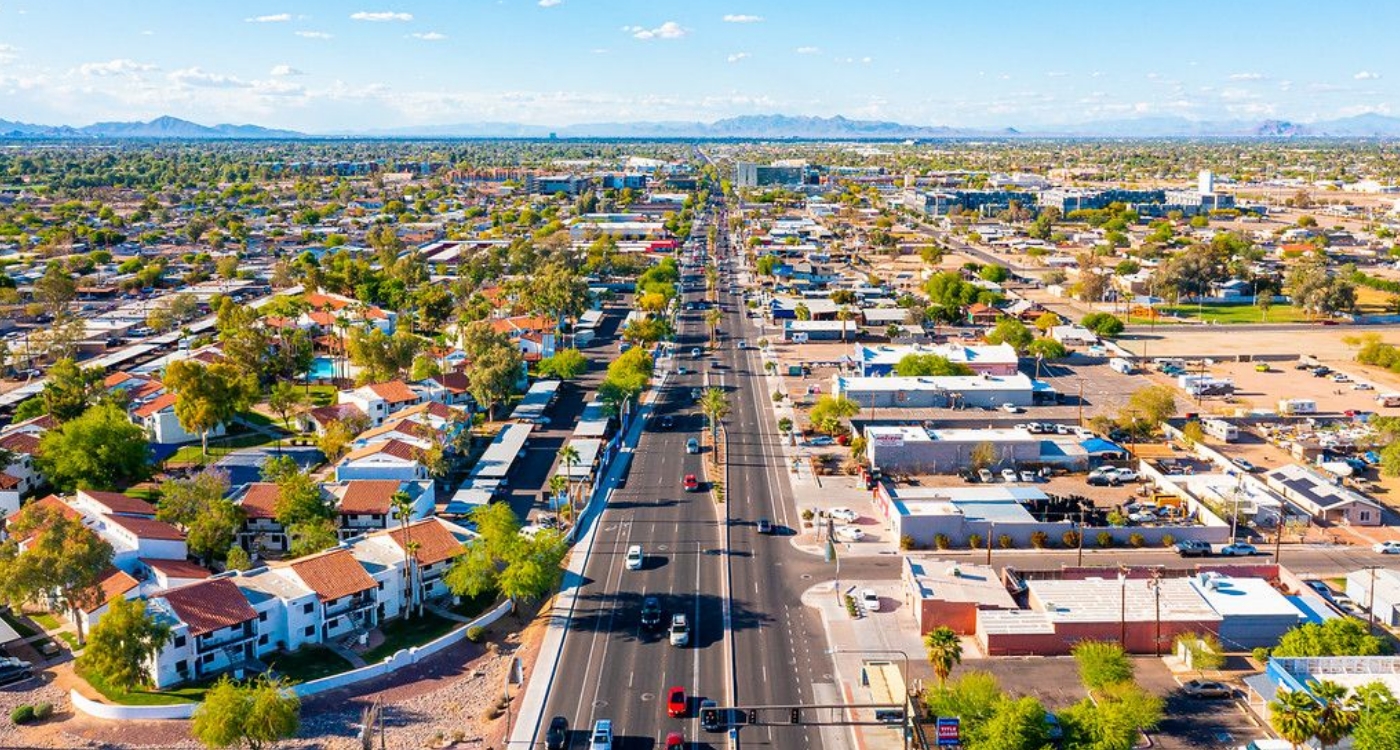
Chandler benefits from low poverty rates and strong housing demand, resulting in exceptionally low vacancy rates compared to other large U.S. cities.
The city is a significant hub for high-tech manufacturing, with over 12,000 employees working in the sector. Intel maintains a major campus in Chandler, and the city has attracted numerous tech companies, driving rapid job growth.
High shares of urban prosperity are also found in the mid-Atlantic
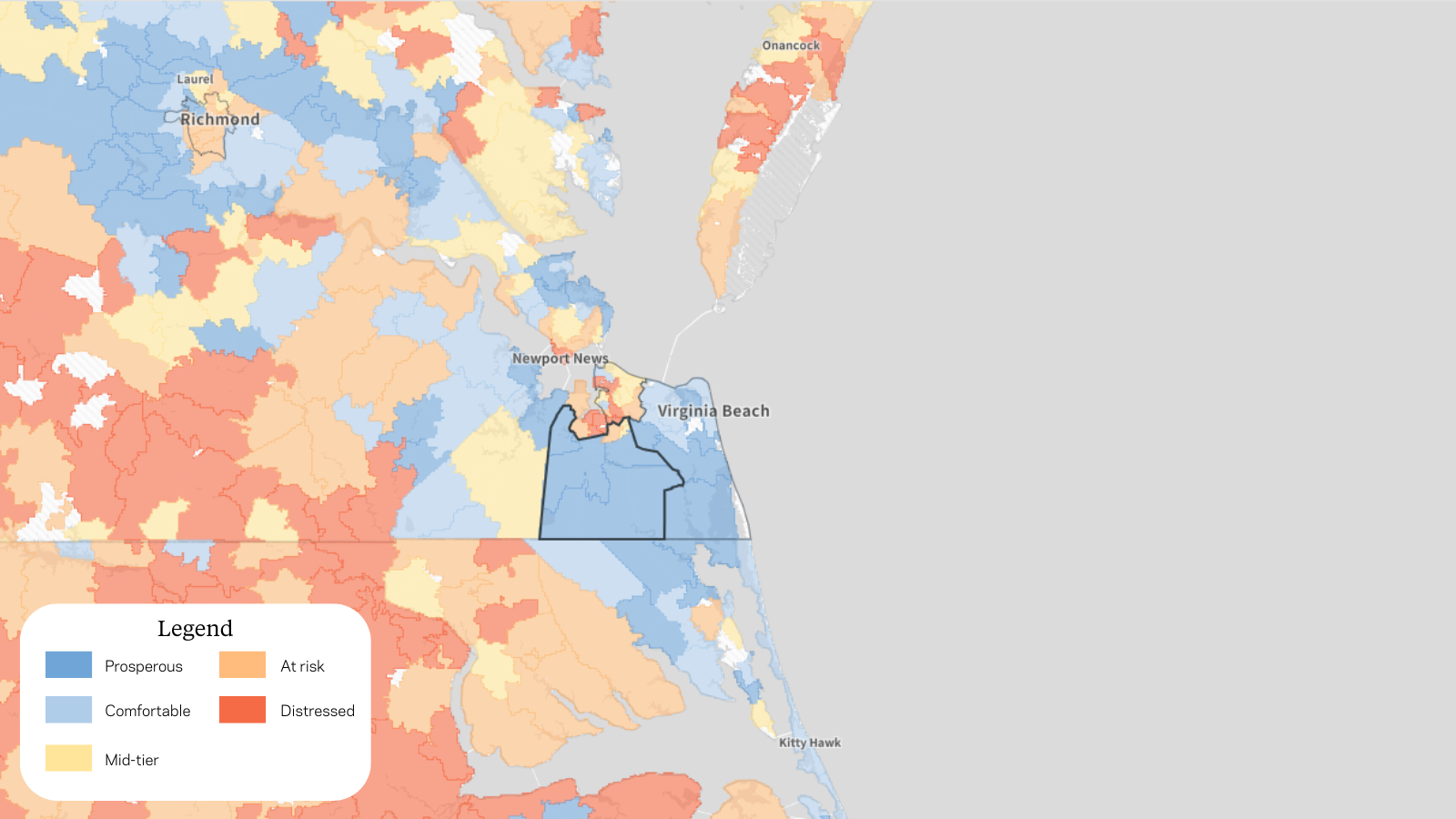
On the opposite side of the country, Chesapeake, VA (3rd) has quietly emerged as a significant center of economic well-being.
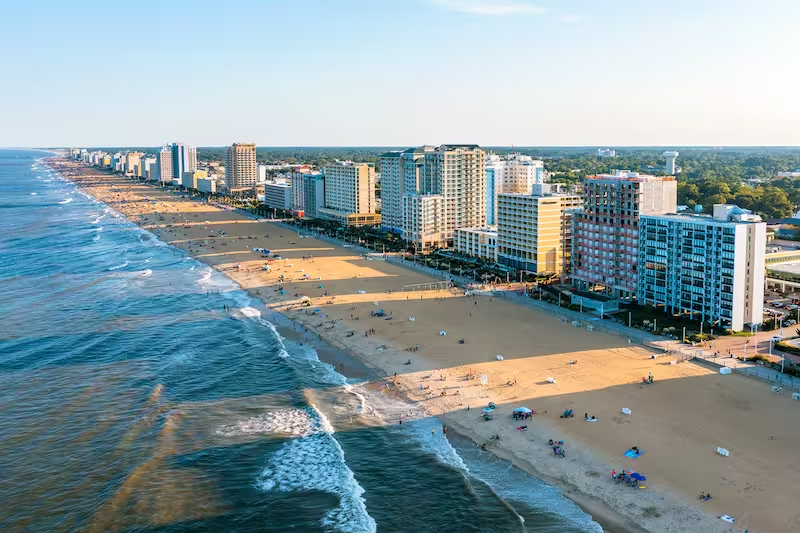
Situated in the Hampton Roads metropolitan area, the city and the surrounding region are defined by a strong military presence and a thriving tourism industry centered around Atlantic coast resorts. Chesapeake exhibits low poverty rates, high educational achievement, and relatively high incomes.
Economic distress is most prominent in legacy cities
The ten cities with the highest share of residents living in distressed zip codes are:
Cities grappling with widespread economic hardship often suffer from high poverty rates stemming from deep-rooted social and economic issues. These cities typically share the following characteristics:
Legacy Cities: Primarily located in the Midwest and parts of the South, these cities have faced significant challenges in transitioning from economies reliant on traditional industries like manufacturing to a more technologically driven, knowledge-based economy. This transformation has often been uneven, leaving many residents behind.
Racial Segregation: A substantial number of economically distressed cities also exhibit stark racial divisions. Historical systemic racism has contributed to the persistent economic disparities between affluent and impoverished neighborhoods.
Nearly all of the country’s most distressed cities are in the heartland
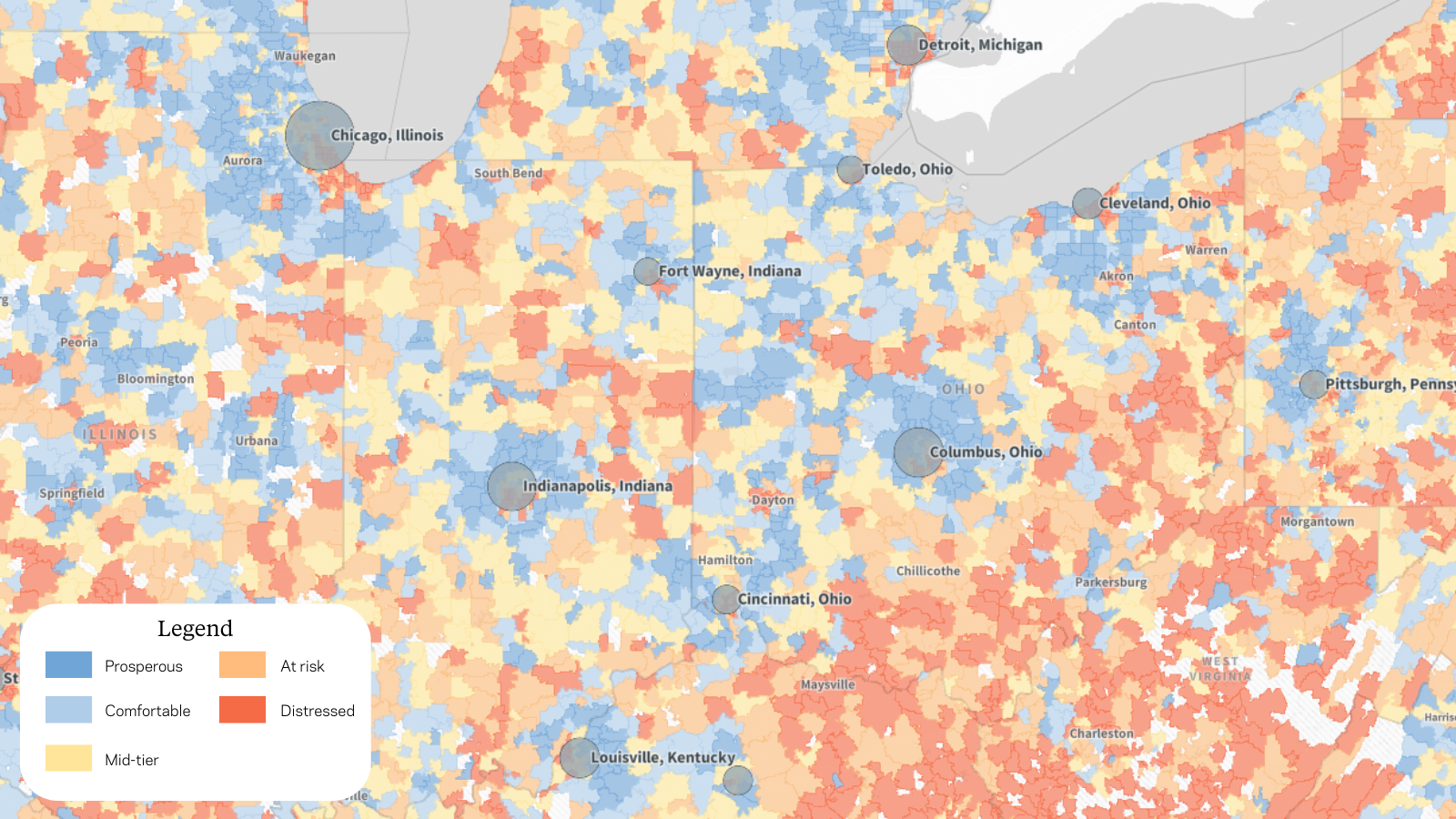
Many cities with high concentrations of distressed communities are in the former industrial Midwest and Northeast. Cleveland and Newark top the list, with their entire populations in distressed neighborhoods. Other high-ranking cities include Detroit, Buffalo, Baltimore, and Milwaukee, all of which share a history of industrial decline.
Despite economic challenges, these cities have valuable assets like universities, corporate offices, and healthcare institutions. New Orleans, Memphis, and St. Louis also rank among the most distressed cities, facing similar challenges in transitioning from legacy industries, attracting skilled workers, and developing high-tech sectors.
New Orleans is a petrochemical hub, while St. Louis has ties to the oil and automotive industries. Memphis, despite being home to FedEx and a major cargo airport, struggles to share in regional economic prosperity, with significant disparity between the city and its affluent suburbs.
Cleveland (T-1st)
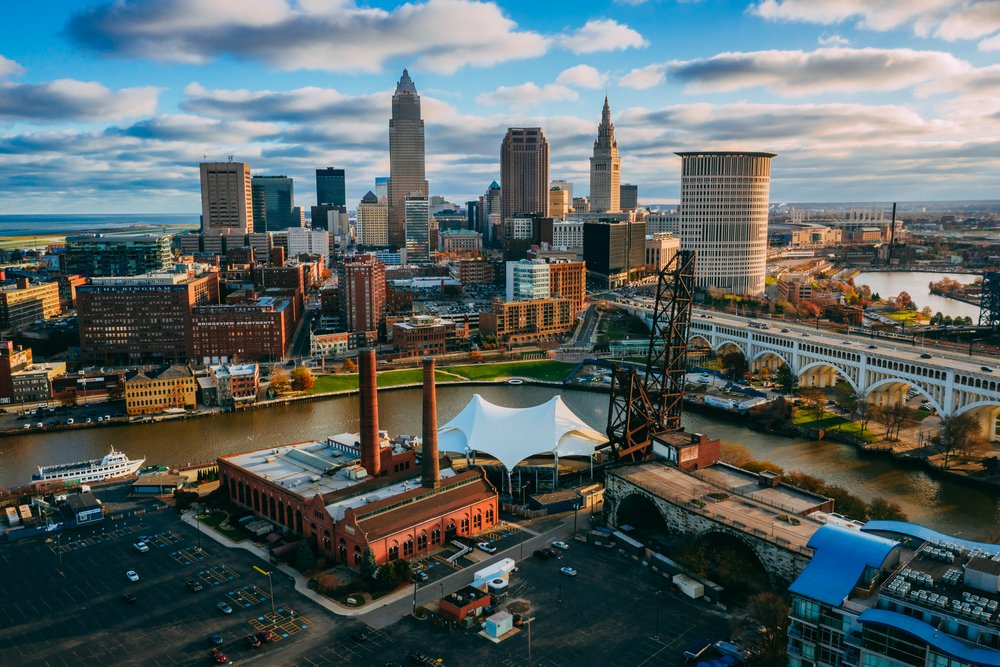
Cleveland, formerly a major industrial hub renowned for steel production, has experienced a dramatic population decline since 1950, losing over half of its residents as manufacturing jobs vanished. The city’s economic woes are pervasive, with every zip code classified as distressed. On average, a third of each zip code’s population lives below the poverty line. Most areas are seeing a decline in both employment opportunities and business activity. In a typical zip code, African Americans constitute approximately half of the residents.
Newark (T-1st)
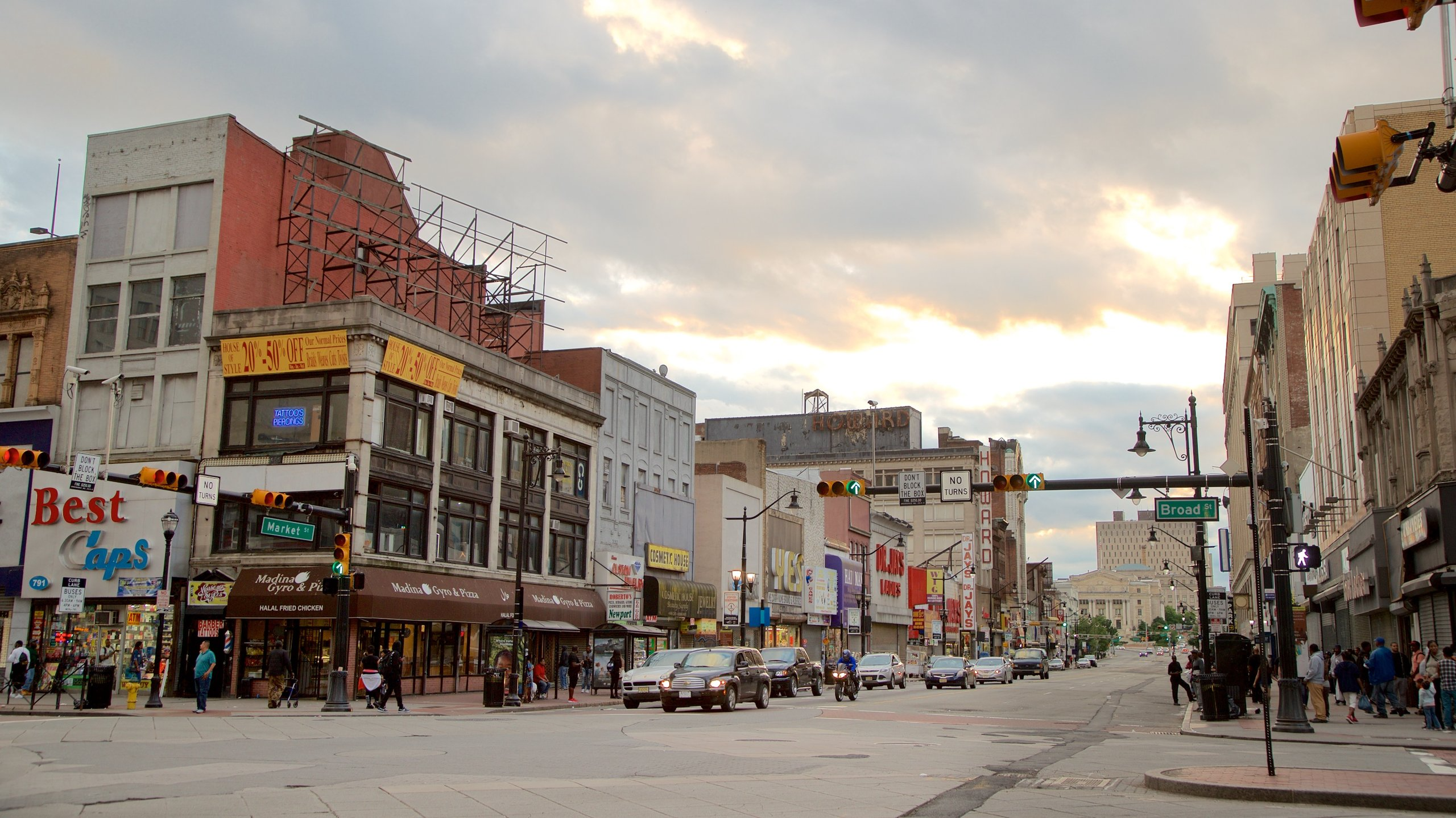
Unlike Cleveland, Newark has not experienced as severe a population decline, even adding residents in the last two decades. Despite being entirely composed of distressed ZIP codes, Newark benefits from its location within the nation’s largest metropolitan area. The city’s vacancy rates are relatively low, and while jobs have decreased in the average ZIP code, the number of establishments has grown. This, coupled with the city’s high average foreign-born population (31 percent), suggests a vibrant economy, even amidst widespread poverty.
Detroit (2nd)
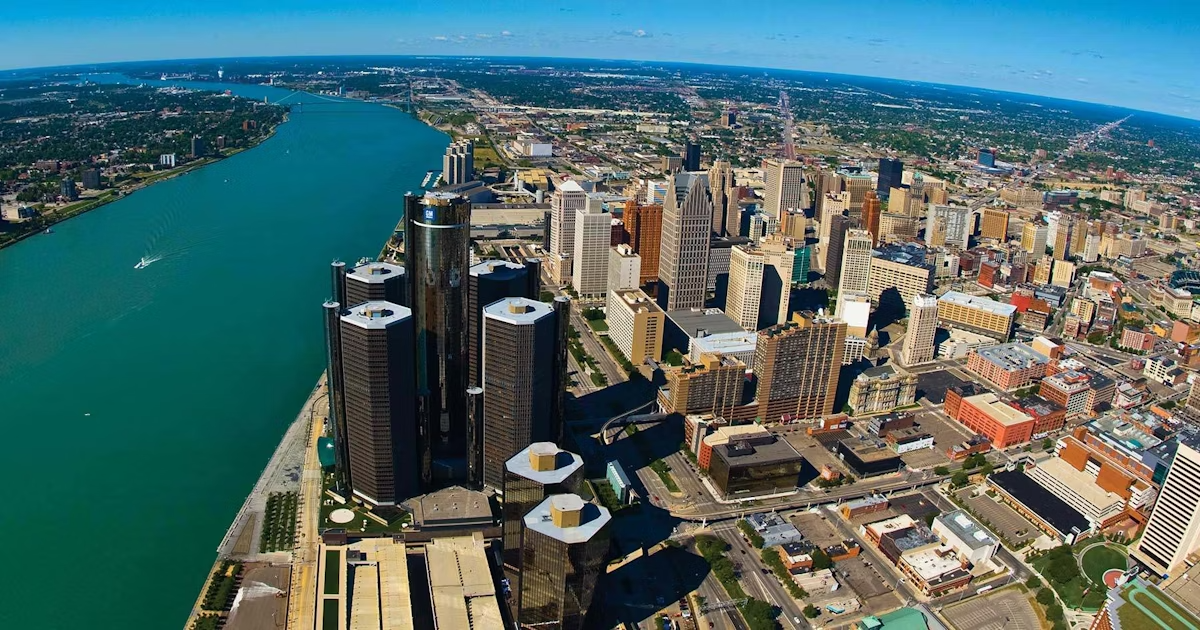
The latter half of the 20th century saw Detroit bear the brunt of deindustrialization’s negative effects. The city experienced a swift and dramatic exodus of residents, leaving a lasting impact. Even now, roughly one in four homes in an average zip code stands empty. Due to widespread white flight from the most troubled areas, about 75 percent of residents in a typical zip code are Black. Although there have been attempts to breathe new life into various neighborhoods, particularly the downtown area, Detroit’s population continues to dwindle.